
Wavelength Focus:
Red Light (635nm)
- Penetrates deeper into tissues
- Promotes cellular repair
- Reduces inflammation
- Ideal for muscular & joint pain

Curious about how light can transform pain management? Discover the science behind Erchonia's dual-wavelength lasers and their remarkable benefits.
Delve into the science behind Erchonia's innovative dual-wavelength lasers, understanding how red and violet light work in harmony to optimize healing and provide comprehensive patient care.
At Erchonia Laser, we are committed to illuminating the science behind low-level laser therapy (LLLT). One of our most innovative advancements is the use of dual-wavelength lasers that combine red and violet light. This approach not only enhances the therapeutic effects but also allows for targeted treatments tailored to individual needs. Let’s dive into the details!
Understanding how these two wavelengths work in harmony can significantly impact pain management and recovery. The red light (635nm) penetrates deeper into tissues, while the violet light (405nm) addresses surface-level issues. Together, they create a powerful synergy that optimizes healing processes. Research published in PMC NCBI highlights the effectiveness of specific light wavelengths in therapeutic applications.
Dual-wavelength therapy involves the simultaneous application of both red and violet light, resulting in enhanced therapeutic outcomes. The red light is primarily known for its benefits in promoting cellular repair and reducing inflammation, which is essential for chronic pain conditions. In contrast, the violet light has unique properties that can help combat bacterial growth and improve skin health.
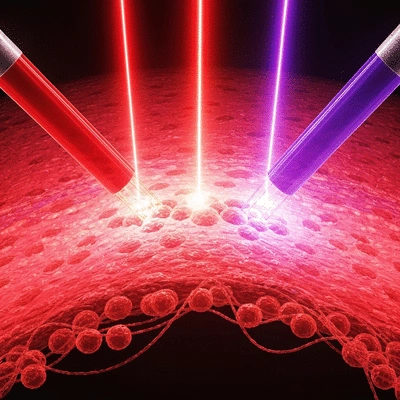
Utilizing both wavelengths, patients can experience a comprehensive approach to healing. This method not only accelerates recovery but also enhances overall well-being, making it an attractive option for those seeking non-invasive solutions. For more information on the clinical applications, refer to studies like the one registered on ClinicalTrials.gov exploring the efficacy of laser therapy.
Photobiomodulation (PBM) is the process through which light energy is absorbed by cells, initiating a cascade of biological responses. When red and violet light interact with cellular components, they stimulate mitochondrial activity, leading to increased ATP production—the fuel your cells need for repair and regeneration.
This process creates a natural healing environment, allowing your body to do what it does best—heal itself. At Erchonia Laser, we aim to empower patients through a deeper understanding of how these mechanisms work, helping them make informed decisions about their health.
The specific wavelengths of light play a critical role in determining the effectiveness of treatment. Each wavelength interacts with tissues in different ways, influencing the overall healing response. Understanding this can be crucial for tailoring treatments to individual patient needs. A review in Wiley Online Library delves deeper into the mechanisms and clinical outcomes of photobiomodulation.
By leveraging the unique properties of both wavelengths, we can optimize treatment strategies for a range of conditions while ensuring safety and efficacy. Keeping the science accessible is a core mission at Erchonia Laser, as we believe that knowledge empowers patients to take charge of their wellness journey.
According to recent studies, low-level laser therapy can lead to a 70% improvement in chronic pain conditions after just a few sessions. This underscores the potential of dual-wavelength lasers in enhancing recovery and well-being.
At Erchonia Laser, we believe that understanding the benefits of dual-wavelength lasers is essential for both patients and healthcare providers. These lasers not only provide immediate relief but also offer long-term solutions for a variety of conditions. Let's dive into the key advantages that come with using our innovative technology!
One of the most compelling aspects of Erchonia’s dual-wavelength lasers is their long-term efficacy. Patients often report sustained pain relief and improved functionality even after completing their treatment sessions. This is largely due to the way the lasers promote cellular regeneration and healing.
Feedback from patients indicates that the benefits can extend well beyond the immediate effects of treatment, leading to a more holistic approach to wellness. Isn't it refreshing to think about pain management in this way?
Another significant benefit of dual-wavelength laser therapy is its analgesic effects. The therapeutic light stimulates your body's natural healing processes, which can lead to increased energy production at the cellular level. This means that not only does the therapy help alleviate pain, but it also promotes overall recovery.

As a result, many patients find that they not only experience pain relief but also a surge in overall vitality. This rejuvenating effect makes dual-wavelength laser therapy an exciting option for those looking to enhance their wellness journey!
Here is a quick recap of the important points discussed in the article:
Erchonia Laser Research: New Insights

Curious about how light can heal? Low-level laser therapy (LLLT) is emerging as a groundbreaking, no
Erchonia Laser Therapy and Mental Health

Curious about how light can illuminate not just your path, but also your mental well-being? Low-leve
Emerging Trends in Laser Therapy
How prepared are you for the future of healthcare? In an era where technology meets medicine, unders

Erchonia Laser Research: New Insights
Erchonia Laser Therapy and Mental Health
Emerging Trends in Laser Therapy
Myths About Low-Level Laser Therapy
Understanding Erchonia's Dual-Wavelength Lasers